
S Janaki Amma: The People’s Singer
To me, Janaki Amma was the voice that carried me through exams, bus rides, heartbreaks, and joy

When S Janaki passed away on 11 July 2026, tributes from politicians, actors, and music directors poured in. Even the President’s tweet called her passing “an irreparable loss to the world.” Yet her impressive work across six decades and 20 languages cannot be reduced to a tribute mentioning only a handful of “superhits.” For those of us who grew up in Chennai, she was the soundtrack of buses, temples, radios, tea shops, and lonely afternoons. This piece is not about her hits, but about how she lived in the everyday lives of Tamil people.
“Nilendru sonnal manam nindral pothum
Neengatha nenjil alai ointhaal pothum
Mounathin raagam kelaatho
Mounathin thaalam podaatho”
The song wafted from the speakers of an auto in Chennai as my grandmother and I travelled to yet another temple on a hot afternoon in May of 2002. The voice was mesmerising: sweet high notes paired with beautiful music. It carried a classical tune to it, so I knew it was an old song. I did not remember the lyrics when I got down from the auto, but I remember her voice. The innocent, girlish voice returned when I switched on the TV back home. This time, it was Chinna Chinna Vanna Kuyil. I remember thinking it was actress Revati’s voice until my parents explained the concept of playback singers and told me the singer’s name for the first time: S. Janaki, lovingly called Janaki Amma by all of us.
Janaki Amma was not new to Tamil cinema, but she was new to me then. As a ‘90s kid addicted to SCV channel (remember the one Sun Music replaced?), I was not keen to explore the ‘80s and only listened to her collaborations with music director A.R. Rahman. Armed with cassettes of Sangamam (1999), Gentleman (1993), Mudhalvan (1999), and Jodi (1999), I loved experimenting with her high-pitched, gentle voice only to fail spectacularly when my mother opened the door and laughed at my falsetto attempts. By 2012, she gave me her old feature phone on which I spent hours listening to FM Radio while travelling to tuition classes. Janaki Amma’s voice and the 80s melodies returned to my playlist: Putham Puthu Kaalai in the mornings, Sippi Irukuthu Muthum Irukuthu in the evenings, Dhoorathil Naan Kanda Un Mugam at nights after RJ Girish’s Diary. Her voice soothed the anxiety of exams and college admissions.
Years passed, and with college peer pressure, Janaki Amma’s tranquility was replaced by contemporary Hindi and Tamil music, Taylor Swift, and the storm called One Direction. Yet her evergreen duets with SP Balasubrahmanyam accompanied me on lonely afternoons in the library and on days I bunked college. As a college student from Chennai, crowded public buses were the most economical means of travel. Armed with a bus pass and a pair of earphones playing Janaki Amma’s music, I travelled alongside mothers dropping off their kids at school, office-going aunties and uncles, and other students. One group that I loved travelling with were the flower sellers whose fingers deftly made garlands out of jasmine, chrysanthemum, firecracker flower, roses and December flowers. The speed in which they tied the flowers together in M21C bus, going from Kannagi Nagar to Central Station is a strong memory, reminding me of the song:
Poo mara paavai neeyadi
Ingu naan paadum
Paamara paadal keladi
Ohoo hoo ooo
Maniyae manikuyilae
Maalai ilam kadhirazhagae
(Nadodi Thendral, 1992)
When we travelled on the footboard, cramped for space and without showing our bus passes, on the 21 from Mandaveli to Broadway, the song playing in my mind was:
Vantha thunaiyae vanthu anaiyae
Antha mulla chandiranai
Sontham konda sundariyae
Samikitta cholli vachu
Sernthathintha chella kiliyae
(Aavarampoo, 1992)
And on the best of the days when the direct bus A1 from Central to Thiruvanmiyur was half-empty, the song I would tap my feet to was,
Naan pennaanadhu kalyaanam thedavaa
Oh kannaalan vandhu poomaalai podavaa
Hey ammaadiyo pen paarkum naadagham
(Oho Megam Vandhadho from Mouna Ragam, 1986)
With its Broadway-esque performance and choreography,and its feminist theme bemoaning marriage as women’s ultimate fate, Oho Megam Vandhadho remains relevant across ages, sharply contrasting the youthful energy of first love in Poovarasam Poo Poothaachu (from Kizhakke Pogum Rail, 1978) where she sings with exuberance, brimming with excitement to serve her lover and rest her head on his chest:
“Nedhamum nellu soraakki
Nethili meena kolambaakki
Machaan vandhaa aakki koduppaen
Maarula saanju podhaiyal eduppenae”
From Sridevi to Radhika and Revati, Janaki Amma has sung several introduction songs for leading ladies, conveying their fears, love, and enthusiasm. The relationship between women and nature draws inspiration from nature’s freedom and sustenance for life. In Ival Oru Ilangkuruvi from Bramma (1991), Janaki Amma croons:
“Naan pogum pathai
Nizhal pola kooda
Varugindra poongkatrum
En thozhithan”
She calls the gentle breeze that caresses her as her close friend, expressing her desire to be free and enjoy life to its fullest. These lines particularly hit the point:
“Aalam vizhuthil
Oonjal pottu aatam aaduven
Aaval theera thaalam pottu
Pattu paaduven”
In other songs, the same breeze carries notes of pathos, conveying the grief of lost love. She asks the breeze if it heard the news and saw her dreams in her eyes,
“Thendral kaathae thendral kaathae
Saedhi onnu kettiyaa
Kannippoovu kannil nooru
Kolam potta paathiya”
The last two lines “kannippoovu…paathiya” are literally sobbed, revealing the deep despair over lost love.
Her repertoire expanded further: Bashful tones for Ponnamma, who sings, “Thendral vandhu theendum pothu” or the hushed sensuality in “Sipiyil thapiya nithilame, ragasiya rathiri puthagame” (Raajapaarvai, 1981) or “Veenai yenum maeniyilae Thanthiyinai meettum” in Raathiriyil Poothirukum from Thangamagan (1983). If you have ever heard her sing “Adiye, manam nilluna nikkathadi” (from Neengal Kettavai, 1984) or “Sippi Irukuthu Muthum Irukuthu” (from Varumayin Niram Sivappu, 1980) and not exclaimed, “Haan, ippo paakalam!” when Janaki amma said the same, are you even a fan?
No one can pigeonhole Janaki Amma as the singer who sings romantic melodies or peppy songs. She is also the voice of maternal pride in Then Thoongum Poove (Kodai Mazhai, 1986) and quiet strength behind a despondent son in her swan song, Amma Amma from Velai Illa Pattadhari (2014) singing,
“Nee enn perumayin ellai
Undhan thandhai per sollum pillai
Oorum peridhilai kalangaadhae”
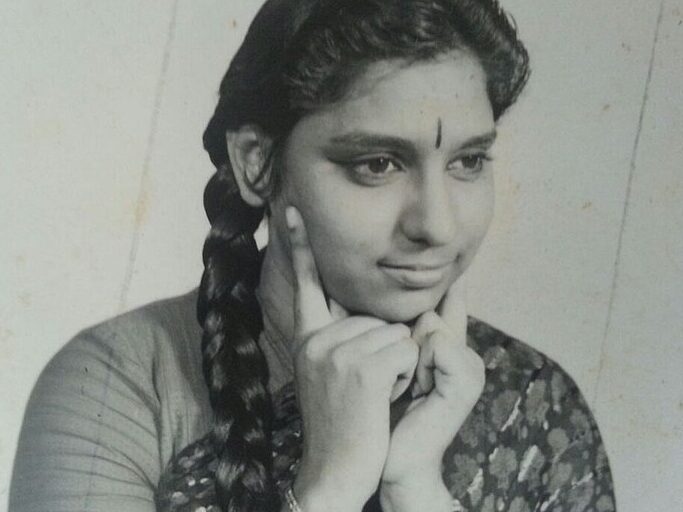
S Janaki in her youth
Given the range of her oeuvre, Janaki Amma’s music evoked different memories, strange emotions, and strong feelings in the people I saw in my everyday life.
Kannagi Akka, an ever-optimistic geriatric caretaker, smiled brightly when I told her I was writing this tribute. She said, “There is no greater song than Sendoora Poove from 16 Vayathinile.” Her smile turns wistful as she feeds her patient. “I remember my mother singing the song to me when she would get me ready for school. After she passed, I wanted to keep a piece of her alive for my blind sister. After all, she only knew my mother’s voice. I would braid my little sister’s hair singing this song,” she said, her voice slightly breaking. She continued, “My sister and I are estranged today, but every time I remember her, I hum this song to remind myself of the good times. It is like the song says, ‘Kangalai mooda vitu, inba kanavinil naan midapen.’” Let me shut my eyes, let me float in my dreams. Silence followed her speech, neither of us capable of articulating what it means to lose a sister and a mother.
Her friend, Kavitha Akka, a cook, chimed in, “Well, I must say, there is nothing quite like Chinna Chinna Vannakuyil from Mouna Ragam.” When I asked why, she stirred the vegetables one last time, turned off the burners and turned to me. “It reminds me of my first job. I worked in an export factory and my best friend…she would drive me crazy singing that song all the time. Soon, the song stuck in my mind. We both got married and moved away, but on days when I remember my best friend, I sing the song loudly as I cook.” Giving me one last smile, she turned to the vegetables once again, singing, “Mannavan perai solli, malligai soodi konden.” Uttering the king’s name, I adorned myself with jasmine. I could not help but remember my college days, relishing the memory of female friendships left in limbos after marriages.
The geriatric patient in Kannagi Akka’s care said his favourite was Singara Velane Deva from Konjum Salangai (1962). “I loved listening to nadaswaram players during weddings. In the wee hours of the morning, when the priests were still readying the altar, the nadaswara vidwans would play ‘Singara velane deeevvaaa, arul seeraadum maarpodu vaa…vaa.’ I would close my eyes and remember her soprano as the instrument played in the background. Even today, her song feels so fresh and new to me,” he remarked, quietly humming the song under his breath with his eyes closed.
For Sumathi, a middle-aged bank employee travelling to work on the bus, Ooru Sanam Thoongiruchu from Mella Thirandhadhu Kadhavu (1986) was a reprieve from the hustle of work and stress of raising two teenagers. “When I put on my earphones and listen to Janaki amma, I don’t have the responsibility of a mother or a bank clerk. This is my free time. I listen to Janaki Amma and then move on to watch an episode of my favourite soap opera. It keeps me balanced. I have to go home and do work again.” Sumathi grins and I wonder how she handles everything. She simply shrugs and says, “There lies happiness. It is our responsibility to know the right measure of everything.”
Velu, the bus driver, loves the fast-paced, “jolly songs” of Janaki Amma. In his words, “It is a hard job, driving a bus. I love it but I am responsible for the lives of many. My shifts are long but I make sure I play Janaki amma’s Aasai Adhigam Vechu from Marupidiyum at least once a day. It gives me a boost of energy I cannot describe. The folk combination by maestro Ilaiyaraja is simply unimaginable even today, in my opinion,” he says. He opens his phone to show a reel on Instagram, set to Aasai Adhigam Vechu and grooves to it in front of me. I cannot help but laugh as he enacts the steps while holding a cup of tea in one hand and the phone is another.
As I worked on penning how strangers took time to speak to me about their relationship with Janaki Amma, I looked from my laptop to see my Appa return from his morning walk. I struck up the conversation with him, telling him about the people I interviewed. He simply chuckled and said, “I can’t believe no one said Annakili Unnai Theduthe from Annakili (1976). When Janaki Amma starts the vocals of the song with the ‘Aaah aah’ in her perfect pitch, it sounds like her voice is travelling through the clean and clear air of mornings to wake us up and refresh us. I listen to it when I walk.” He showed me his playlist and simply said, “Yes, there are troubles and there is anxiety, but sometimes we just need Janaki Amma and Raja sir giving us the push we need, kanna.” He squeezed my arm, pressed play on Thanga Sangili Minnum Paingili from Thooral Ninu Pochu (1982) and went to take a shower. It dawned on me then. For the working class people we see everyday, Janaki Amma was a moment of stillness, a breath of fresh air, and a symbol of relationships they hold close to their heart. Janaki amma was the art through which they saw the moments of their lives. She entered their hearts, their minds, their memories and their relationships but she could not enter the hall of fame, where her contemporaries, Lata Mangeshkar and Asha Bhonsle, had already made their mark. Before her retirement, she sung 48,000 songs, some devotional and some even in foreign languages. She had won 33 state awards and four national awards but no award was given to honour what she had given to the Tamil, Telugu, Kannada, and Malayalam music listeners.
After a lifetime of singing and bestowing her art to simple mortals like us, Janaki Amma turned down the Padma Bhushan in 2013 calling it a “too little too late.” She noted that she should have been awarded the Bharat Ratna instead. She did not reject the honour itself but the manner in which it was bestowed. It was a deeply political move, highlighting how South Indian artists are consistently sidelined or acknowledged belatedly. Her refusal to accept the Padma award was a dignified protest against tokenism and a protest against the injustice of a recognition that arrived too late in life.
In her death, the same danger looms over us, with honours and tributes that fail to capture the intimacy between an artist of her calibre and the people who adore her. To me, Janaki Amma was not just a playback singer; she was the voice that carried me through exams, bus rides, heartbreaks, and joy. Her songs remain immortal, reminding us that true recognition of such an artist lies not in belated honours but in the lives she has touched and the souls who are glad to have lived in the same time as her.
Subscribe to the newsletter
Free. Independent writing on cinema and adjacent arts, delivered by email.
Subscribe