
Dreams, Delirium, and Other Postcolonial Passions
The dream sequences of Uday Shankar’s Kalpana might offer an inroad into the very dream-scape of a nation passing from colony to independent nation.
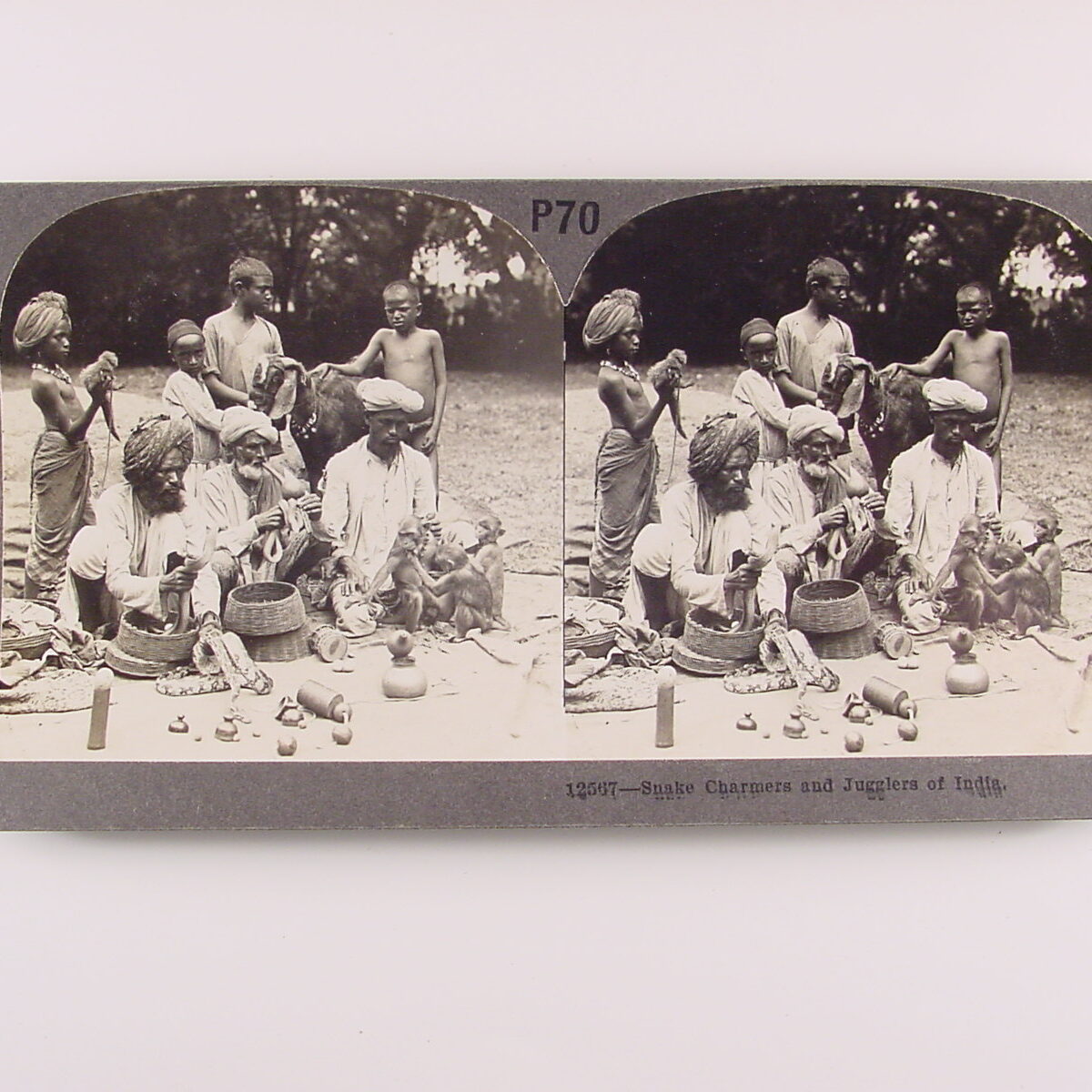
By Nisarg Patel ·
“the crisis consists precisely in the fact that the old is dying and the new cannot be born; in this interregnum a great variety of morbid symptoms appear”– Antonio Gramsci, The Prison Notebooks
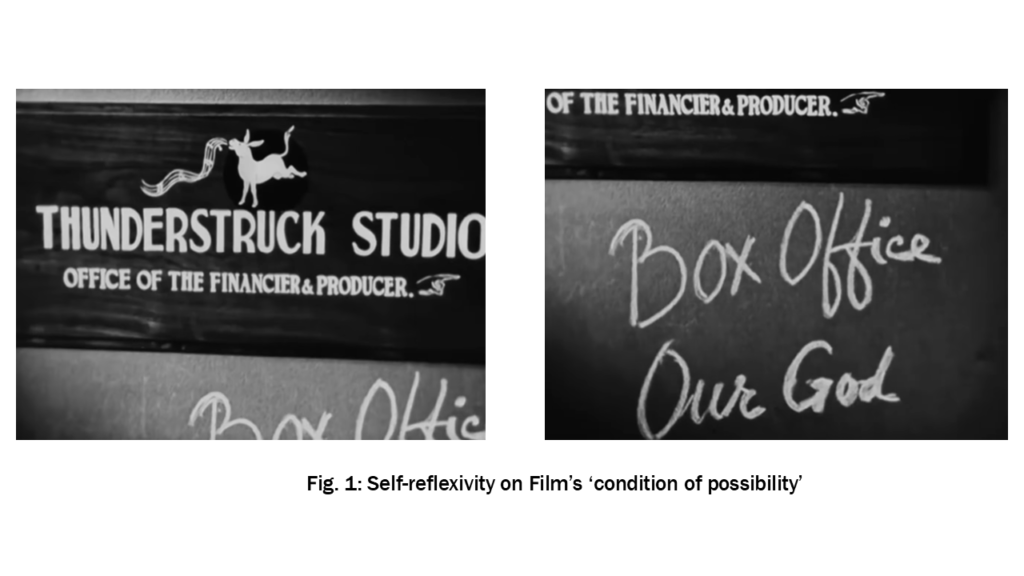
The camera zooms out from an image of a singing donkey. His front legs are rooted on the ‘R’ of the word ‘thunderstruck,’ with music coming out of his mouth, and both of his hind legs, along with his tail, swaying in the air. We read the words ‘Thunderstruck Studio / Office of the Financier & Producer,’ and see a finger guiding our gaze to the right side of the frame. At the bottom is the semi-cut signifier that could be recognized even in its erasure: ‘Box Office.’ The camera would move down so that we can see this erased signifier in all its glory, and we would find, in process, a surplus assisting it: ‘Our God.’ This frame itself emerges as a small poem, a haiku ― ‘of the financier & producer / Box office / Our God’― revealing the very ideological base [finance] undergirding the representative superstructure [the movie itself] we are about to see as we follow the hailing finger.
It is surprising to find such a self-reflexive gesture within a film that is seventy-eight years old and that too directed by a one-time director. The movie – Kalpana, itself will be announced within the diegetic space of the film-text – was both the first and the only movie directed by the dancer and choreographer, Uday Shankar. Released on January 1st 1948, barely five months after Indian independence, the movie was Shankar’s own “semi-autobiographical tale” depicting his “own struggles in setting up a cultural and educational institution in the foothills of the Himalayas” (Heredia). The film follows Udayan from his early childhood- and, in this sense, is a bildungsroman- as he struggles towards establishing a cultural institution that will train the citizens of the newly independent country in various arts. His struggle takes him from a small nameless village to Bombay, via Calcutta, Lucknow, Delhi, Karachi, Lahore, Agra, and Madras. It consists of multiple subplots, including a murder mystery of an exploitative theater owner, a love triangle between Udayan (Uday Shankar), Uma (Amala Shankar), and Kamini (Lakshmi Kanta), and conflicts between artists and bourgeoisie, to name a few.
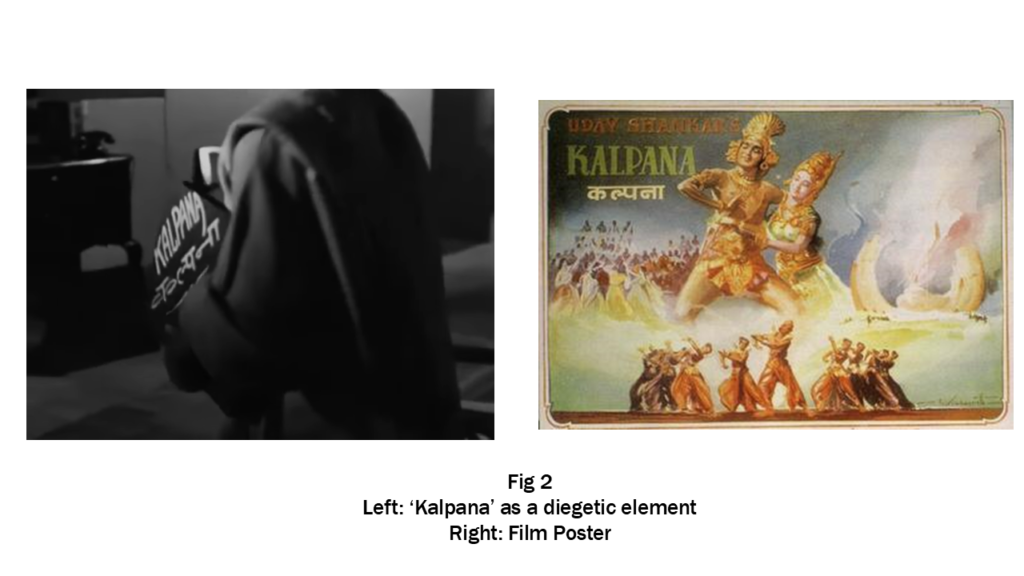
Following the title, ‘Kalpana’―the 160-minute film is “melodramatic narrative with long, hallucinatory interludes of songs and dances, experimental music with Indian instruments, ethnographic footage of Indigenous dancers, and stilted, overdramatic dialogue about a great Indian socialist utopia” (Heredia). The movie, as Shai Heredia notes, was already four years in making by the time it was released, situating its production timeline (from 1944-1948) during one of the most decisive time periods of modern Indian history. Given the particular political, cultural, economic ‘conjuncture’ [à la Stuart Hall] during which it was produced, the film has a good dose of everything―there are repeated scenes of physical violence; ethnographic vignettes of everyday life; educational bits, including criticism of the institutionalization of the modern education system; social commentary and criticism; sarcastic portrayal of the bourgeoisie; a paean to Indian nationalism with an internal critique of sectarianism; reflection on the business of film production; critique of industrial modernity; and, what interests me in my essay today, dreams. It is not difficult to see the reason behind the wide range of social and economic themes which are embedded throughout in Kalpana― the themes, from civic education to cultural criticism, are symptoms of the time during which the movie was conceived. Uday Shankar’s Kalpana, being a product of its time, clearly bore all the traces of that era. However, amongst all such programmed tropes which both circumscribe and dictate over a(ny) medium as it operates at a particular time and place [cinema in 1940s India in our case], there are sequences within the Kalpana which lie at the border of its programmed narrational logic, and that too in at least two distinct but inter-related ways: Firstly, these are the sequences which are dreamed by a character as they fall “into sleep by withdrawing from the external world” (Freud RSE XV 77). This act of withdrawal is crucial here because it is as a result of this very act that the film is able to suspend the narrative economy which propels the film-text. Secondly, given their ‘withdrawal,’ these sequences tap into the “optical unconscious” of the film-text, which otherwise and elsewhere remains too caught up and ‘overdetermined’ [Überdeterminierung to use Freud’s word] by the film’s immediate context and content (Benjamin SW V2 510-512). Given this local suspension of the narrative and the parallel implosion of the unconscious, how are we to understand these dream sequences within Kalpana? It would be pertinent here to mention that these dream sequences are among the first, if not the first, ever to be incorporated into an Indian film. Given this fact, the dream sequences not only promise a privileged insight into the dream-world of mid-20th century cinema, but, considering the historical conjuncture within which the film was produced, they might potentially offer an inroad into the very dream-scape of a nation undergoing an unprecedented transformation from being a colony to becoming an independent nation.
In this short essay, I want to think about dreams, the work of the dreams, and the ‘dream-work’ [traumarbeit] as it manifests in Uday Shankar’s Kalpana. The question I want to pose as my point of departure is the same question with which Sigmund Freud, more than a century back, began his inquiry, but this time with a media rejoinder: do these cinematic dreams have “a sense” to them? (Freud RSE XV 73)? Furthermore, following Freud, if we are to treat dreams as “a neurotic symptom,” what exactly is this neurosis that grips the imagination of a place at the threshold of ‘colonial to postcolonial’ transition (Freud RSE XV 73)? What does ‘Bombay cinema’ dream of― Bombay, which, we must remind ourselves, itself came to be known as माया नगरी, the city of dream/illusion [depending on how you translate माया]? And, finally, what can these cinematic dreams tell us about anxieties and passions as they permeate the psychic and cinematic screens of mid-century India? Four interconnected questions, then, all surrounding dreams.
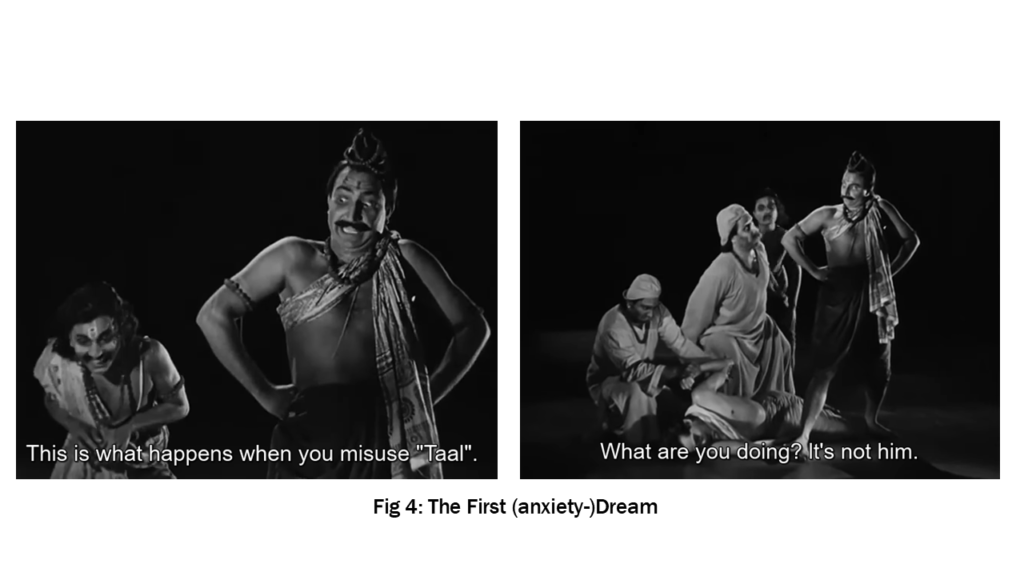
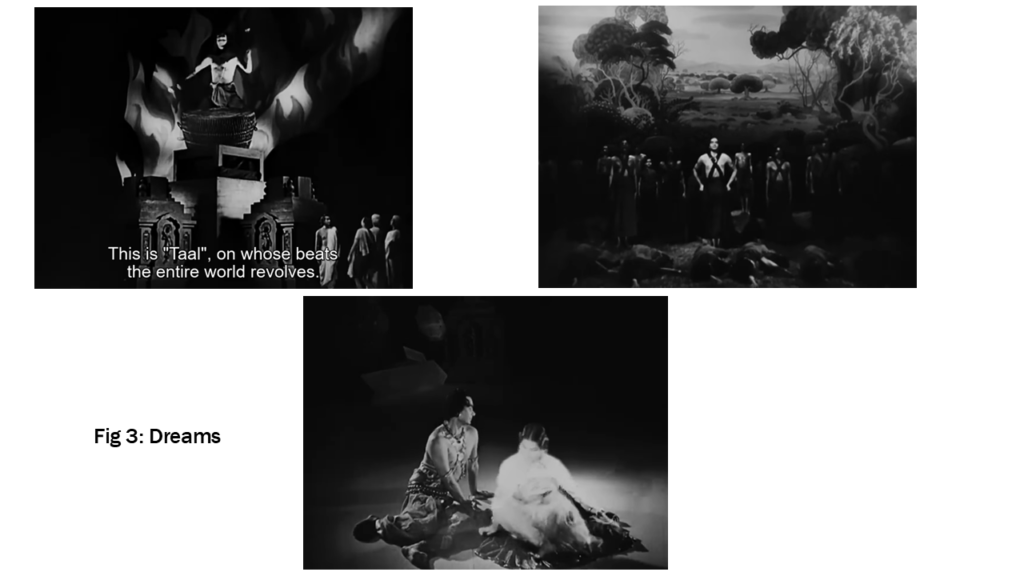
It is not without some curiosity that we should note the fact that the first dance sequence in a ‘dance film’ occurs within a dream. The sequence, which is almost four minutes long, is set off when Udayan, the lead character, dozes off while listening to his friend practicing the sitar. Repeated knocks wake him. Udayan gets up, as a somnambulist, asking “who’s there?” He opens up a door (a door to his own subconscious, one wonders) and finds himself falling down from a high cliff into deep waters. This scene of the fall, from great heights to even greater depths, not only sets the tone for an anxiety dream, but, through this vertical motion, simultaneously evokes the effect of falling into the deep recesses of Uday’s consciousness. It is no surprise that when Udayan wakes up inside the dream, he finds himself being tortured and laughed at because he has allegedly “abused “Taal”” (00:13:54; translation modified), the cyclic pattern used to measure musical time in classical Indian music. The entities who have brought Udayan to this dream-world would soon realize that they have made a mistake; however, considering that he is already in the dream-world, they would offer to “show…something.” What will be shown to Udayan, and in turn to the audience, is, of course, music and dance mixed with a good amount of impressive visual tricks. Frames are double-exposed such that we see the musical instruments alongside the dance sequences that accompany them: a xylophone played at the bottom of the feet of men as they dance on its beats; a flute juxtaposed vertically, as if in a duet with the women; a dholak horizontally juxtaposed alongside an arm; a sarod in the corner as Uma, the female lead, sways to its tune; tabla at the periphery of the frame as men disappear into them; a Saraswati veena on whose strings a group of women dances; a big drum playing a “taal on whose beats the heart of the entire world vibrates,” “transmit[ting] the life force to the universe,” as a character informs us. On the surface, the dream-sequence is very much the one which, given its many tricks, fits what Gunning once identified as “cinema of attraction”― “less as a way of telling stories than as a way of presenting a series of views to an audience, fascinating because of their illusory power and exoticism” (Gunning 382). However, if we look past the spectacle, the “manifest dream content” (RSE XV 105), as Freud would say, it doesn’t take long to realize that the very impetus, the “precipitating cause” (RSE XV 107), driving the dream-sequence is the question of rhythm, and thus, temporality. Note how the dream-sequence begins with Udayan being tortured for “abusing Taal” and ends when he is shown the original “Taal” which sustains creation itself; and add to these the temporal rhythms of various instruments that we both see and listen to during the four minutes of the dream-sequence.
The theme of time, particularly the sense of being late, will recur in two other places within Kalpana‘s narrative. Soon after this dream sequence, we will see Udayan, now on a national tour with his entourage, waking up too late from sleep. Kamini, who is part of Udayan’s dance troupe and is the romantic rival of Uma vying for Udayan’s attention, shakes him up, asking him to “wake up” and complaining that Udayan continues to sleep even “after coming to this glorious city [of Bombay].” In his response, Udayan checks his wristwatch before replying that this “glorious” city is “filled with filth from Europe and America” and that he likes the (native-)city like “Banaras” compared to the colonial metropole of Bombay. The second instance is during a meeting with the aristocrats and an industrialist that Kamini arranges in order to raise funds for Udayan’s institute. The discussion starts with the legalization of alcohol, moves to drought, before moving on to a woman making a comment: “I don’t understand why Mr. Gandhi, Nehru, Azad, are taking so long to free our country” . The lateness here is, of course, the lateness regarding the very independence of the country. Interestingly enough, a few moments after this remark, Udayan will zone out and will ‘fall into’ a spectacular daydream (I will come back to this daydream in a moment).
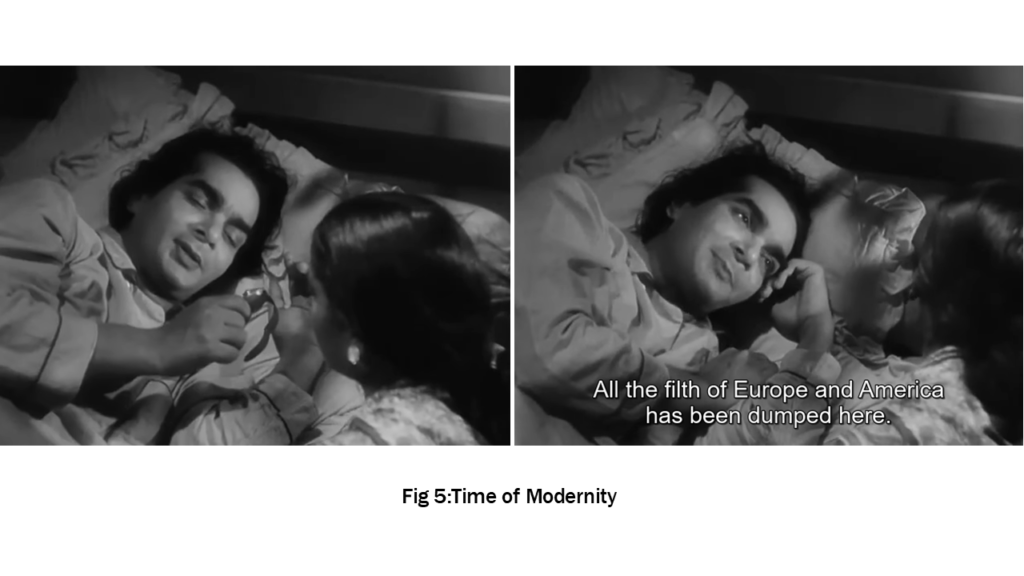
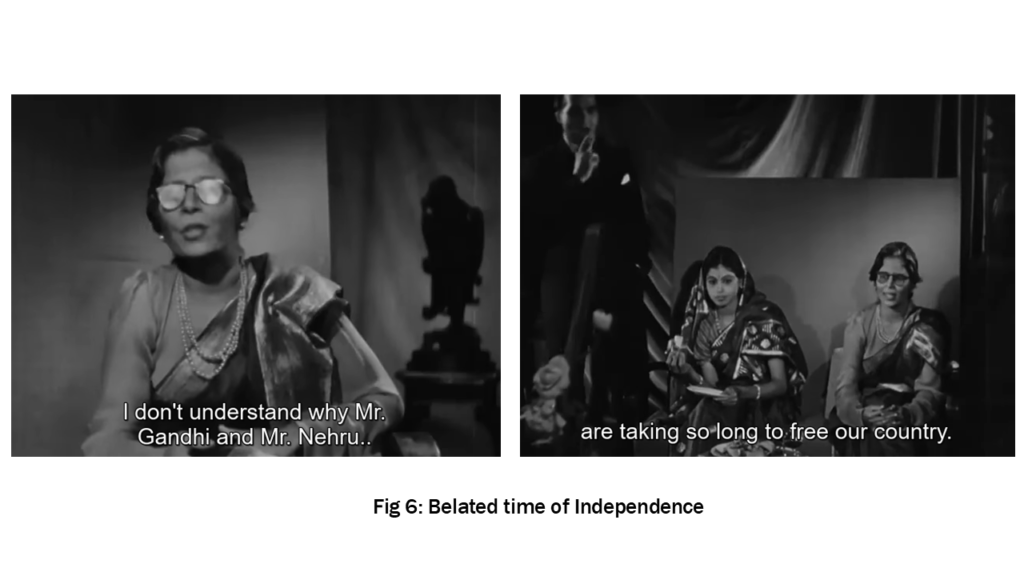
At first glance, it might seem that there is not much that connects these three distinct moments of being out of time―out of time apropos musical rhythm [Taal], out of time with sleep, and out of time for independence. One is aesthetic, the second one subjective, and the third one political. Here, however, we might benefit from heeding to Freud who was amongst the first to note the primacy of metonymic substitution of signifiers as they travel between and across various registers: conscious-unconscious, in terms of the Freudian psyche, and aesthetic-subjective-social, in the case of Kalpana. Very much like “dream-work” which “do[es] not simply reproduce stimulus” but rather “work[s] it over…make[s] allusions to it… include[s] it in some context…replace[s] it with something else,” here too, I would argue, we have one single crisis which undergirds all these three instances (RSE XV 84). The “crisis,” to use Ashish Nandy’s phrase, is the crisis of “modern times…[for] traditional society” (Nandy 162). It is a crisis that is not simply a product of the modern time, but, rather , it is a crisis of time itself, a crisis in temporality. This is the crisis inaugurated by what Dipesh Chakrabarty schematizes as ‘History 1,’ “the universal and necessary history” of capitalist modernity (Chakrabarty 63). It is no surprise that the first symptom of this crisis, the first dream sequence, takes the form of forgetting the correct time-measure of traditional music. And neither should we take Udayan’s debasement of Bombay as a city filled with imported Western “filth” as simply a site of nativist chauvinism. In both these instances, what we see are symptomatic reactions to “modern times,” the temporality of modernity. These are, in other words, reactions against “History 1” whose function is “to subjugate or destroy the multiple possibilities” inherent to social processes― be that subjective life or public aesthetics―that are “antecedents” to capitalist modernity (63-65).
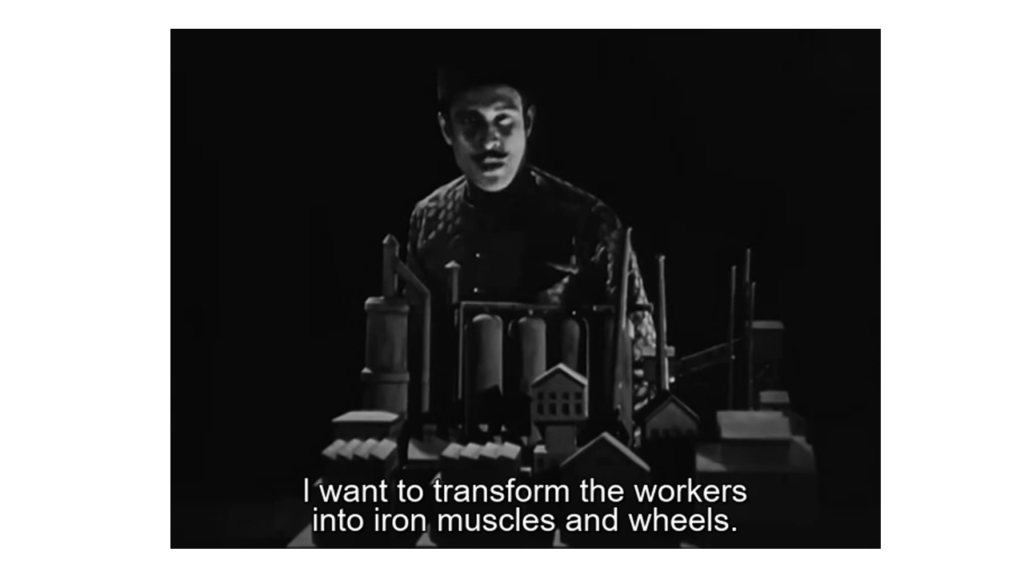
Once we understand the nature of crisis which animates the imaginary register of Kalpana, it comes as little surprise that the film’s longest daydream sequence is structured around ‘the question concerning capitalist technology.’ Amidst the fundraiser which Kamini has arranged with the elites, Udayan falls into a reverie, a strange delirium, which begins with ‘the king of mills’ proclaiming that he wants to “transform the useless workers into muscles of iron and wheels of steel, to transform them into machines.” The sequence will begin with the supervisor whipping the workers, and Udayan trying to incite a rebellion, or revolution, with the phrase “Ab vakt aa gaya hai” [trans. ‘Now the time has come’] which he repeats five times as he moves around the factory floor. Note here, once again, the obsession with ‘time’: being on time or at the right time. The sequence, with an excellent rhythmic background score, juxtaposes moving parts of the machine with moving bodies. We see labourers being physically assaulted and fainting with exhaustion, while the owner proclaims, “Listen, you don’t have to operate the machine, but rather, you have to work like a machine.” This sentence will kick off a spectacular dance-sequence which will begin with a leitmotif “machine, machine, machine”, and in what could be one of the explicit anti-technology sentiments within the movie, the voice-over narrator would lament: “Forgetting this golden land, in which devil’s snare we are caught.” This sentiment would have been widely legible at the time, especially with Gandhi, who not only detected that “[T]echnology had always had elements of instrumentality and control associated with it” but, given that, “refused to grant total autonomy and control to the technologists” (Nandy 135). It is quite clear that Shankar, like Gandhi, was not just “against technologies which replaced the uniquely human aspect of man” but would have agreed that human-to-machine “replacement” turned humans “into mechanical ‘dead’ consumer of utilities” (Nandy 138) ―the very ‘mechanical’ style of Shankar’s choreography is reflective of this point.
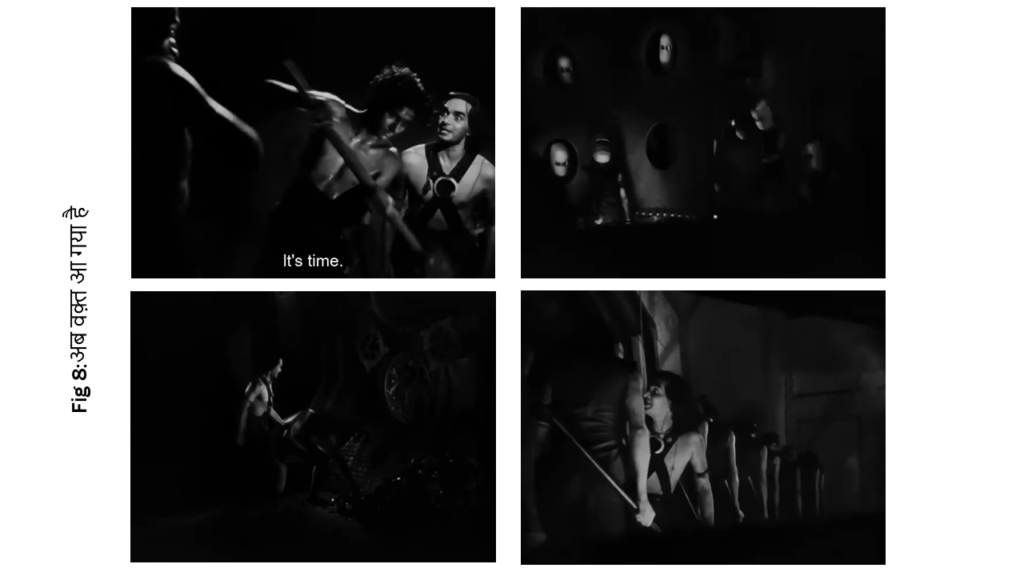
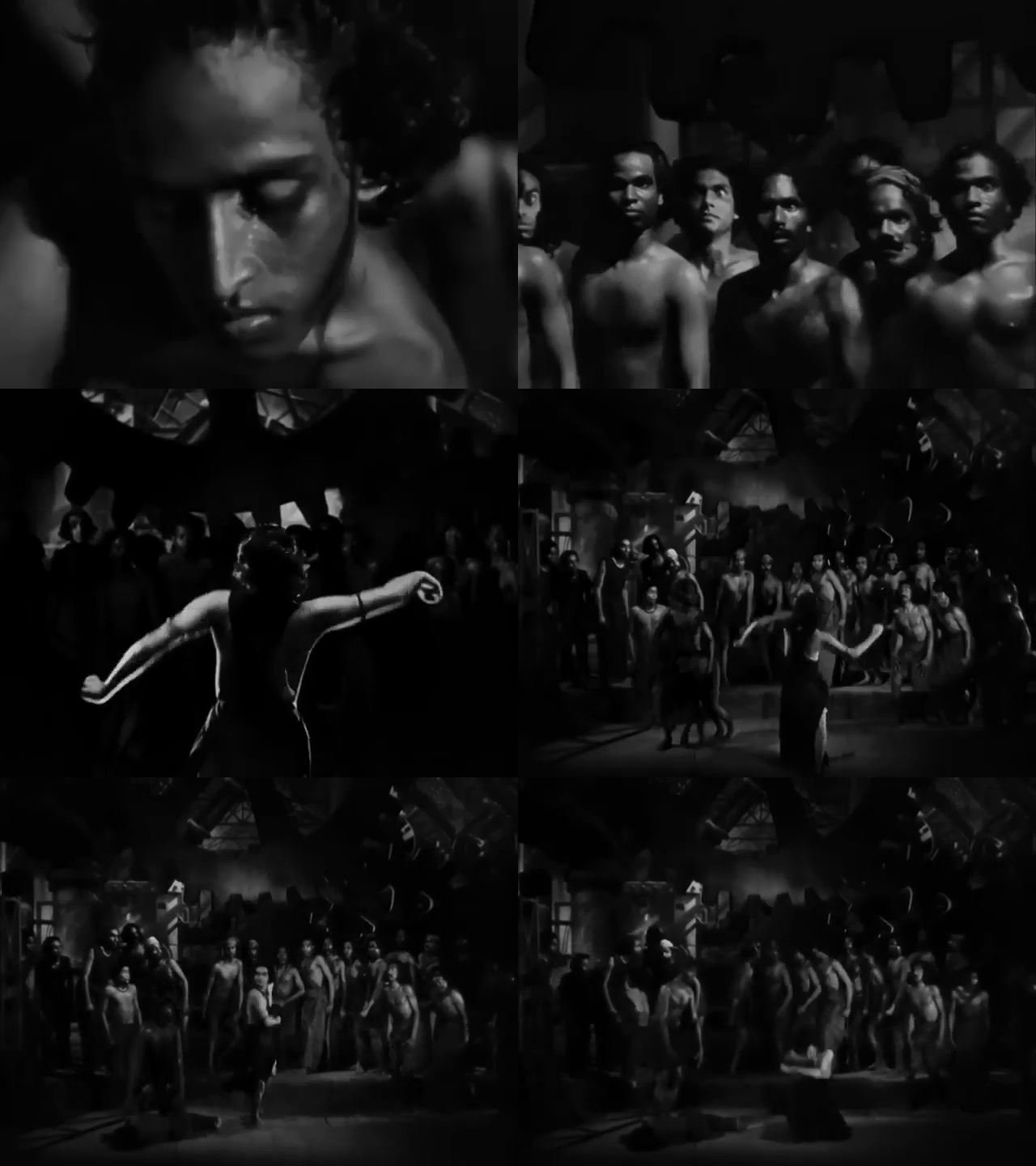
In a strange turn of events, very much like dream-work, the revolt fomented by Udayan against industrial modernity will end on an ambivalent tone. On the one hand, the workers will rise against the owner, surrounding him on all sides and bringing him to his downfall. On the other hand, the risen workers will quickly disperse when an off-screen voice announces “Police”. The repressive state apparatus will win the day, or the daydream, binding the hands of the five remaining workers with rope and giving the helm back in the hands of the owner. The workers will be able to free themselves, and yet, the vocal stimulus which would break the dream and bring Udayan back to the party will be not a slogan of success but rather the evil laughter of the industrialist and the word/signifier “Rupaiya” [trans. “money”]. We can only guess whether the collapse of the revolutionary dream because of “money” was because of Shankar’s own personal pessimism, a pragmatic reality check, or, whether he thought it was maybe too early or already too late. After all, there is an inherent ambiguity within the dream sequence where, in response to Udayan’s repeated incitement that “the time has come,” we hear, “have patience, the right time has not yet come.”
Beyond the anxiety over the time of modernity, of being too late to its game, the movie offers several other instances that represent the deep ambivalence between culture, capital, and modernity within Kalpana. For example, take the nameless character who is presented as a ‘good businessman’ who writes Udayan a check of “50 lacs” and advises him that he should “not consider him [a businessman] to be [morally or otherwise] bad” just because he happens to be “rich”. Similarly, it is intriguing to note that Udayan opens a “Kalakendra” consisting of an “experimental radio station, library, museum, gymnasium, national theater” while simultaneously being deeply suspicious of institutions which have commodified education, “only teach[ing] mental gymnastics” and not “how to be[come] a human”. Finally, while seemingly being against industrial modernity, and particularly sensitive to how “technology would have an immediate impact on social relationships and human self-image,” it is quite delightful and, for us looking back on it somewhat uncanny, to see Madan introducing a machine called “emotional graph” designed to measure emotions of the audience (Nandy 79).
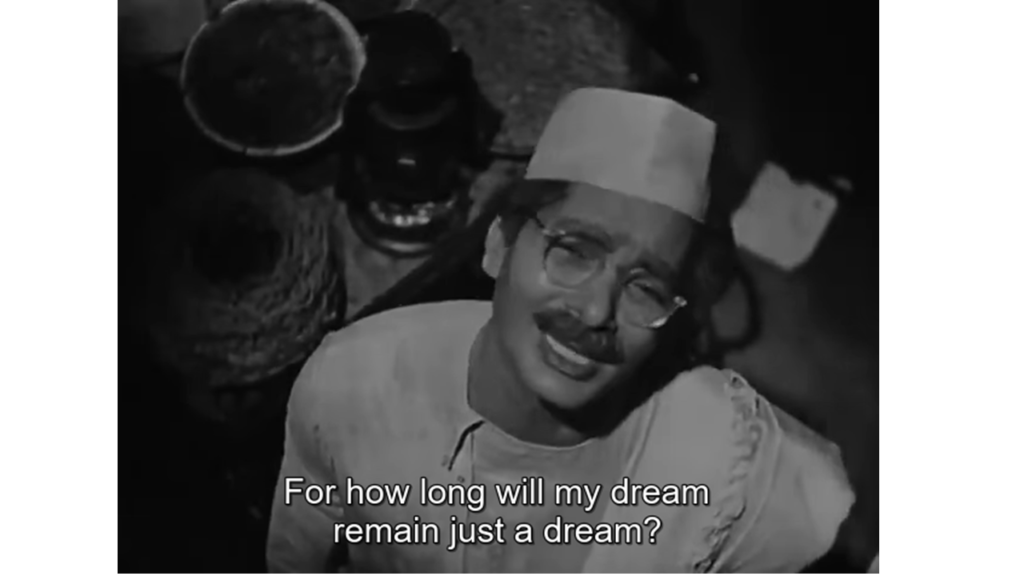
If modern time, the temporality of modernity, is the crisis that grips the film, it has, by no means, left the filmmaker untouched. Just like the film, Uday Shankar, too, is caught by the “double ‘split’ in consciousness” that industrial modernity introduces in a colonial culture at the threshold of transition (Nandy 130-131). What we see within these multiple vacillations― between detesting the Western “filth” of Bombay while making a movie in Bombay; loathing the elites while inaugurating the Kalakendra upon their capital; abhorring institutionalization of education while also creating an institution for ‘holistic’ education, and so on―is nothing but another face of hysterical questioning that puts pressure on the very symbolic identity that has been given, or better assigned, to the (once colonized-)subject. The final act of vacillation comes at the very end of the movie, the end to the movie. Amidst the orgy of dancing bodies and showering cash, we are brought back to where we started: a scriptwriter begging the producer to listen to his story so as to fund his movie. “No love, no kisses, no lovers. Do I want to become a pauper by funding such a movie?” he asks. It turns out, the movie we had just watched was itself a dream.
References:
Heredia, Shai. “Kalpana: Dreaming the Impossible Dream.” The Criterion Collection, 28 Sept. 2022, www.criterion.com/current/posts/7941-kalpana-dreaming-the-impossible-dream
Freud, Sigmund. Introductory Lectures on Psychoanalysis (Parts I and II), 1915–1916. Translated by James Strachey, revised and edited by Mark Solms, The Revised Standard Edition of the Complete Psychological Works of Sigmund Freud, vol. 15, Rowman & Littlefield, 2024.
Benjamin, Walter. Selected Writings: 1927–1934. Translated by Rodney Livingstone et al., edited by Michael W. Jennings, Howard Eiland, and Gary Smith, vol. 2, Belknap Press of Harvard UP, 1999.
Gunning, Tom. “The Cinema of Attraction[s]: Early Film, Its Spectator and the Avant-Garde.” The Cinema of Attractions Reloaded, edited by Wanda Strauven, Amsterdam University Press, 2006, pp. 381–88. JSTOR, http://www.jstor.org/stable/j.ctt46n09s.27. Accessed 20 Sept. 2026.
Chakrabarty, Dipesh. Provincializing Europe: Postcolonial Thought and Historical Difference. Princeton UP, 2000.
Nandy, Ashish. Traditions, Tyranny, and Utopias: Essays in the Politics of Awareness. Oxford UP, 1987.
Subscribe to the newsletter
Free. Independent writing on cinema and adjacent arts, delivered by email.
Subscribe